Procession Process
Various documentation on pinboard, 2024-5.


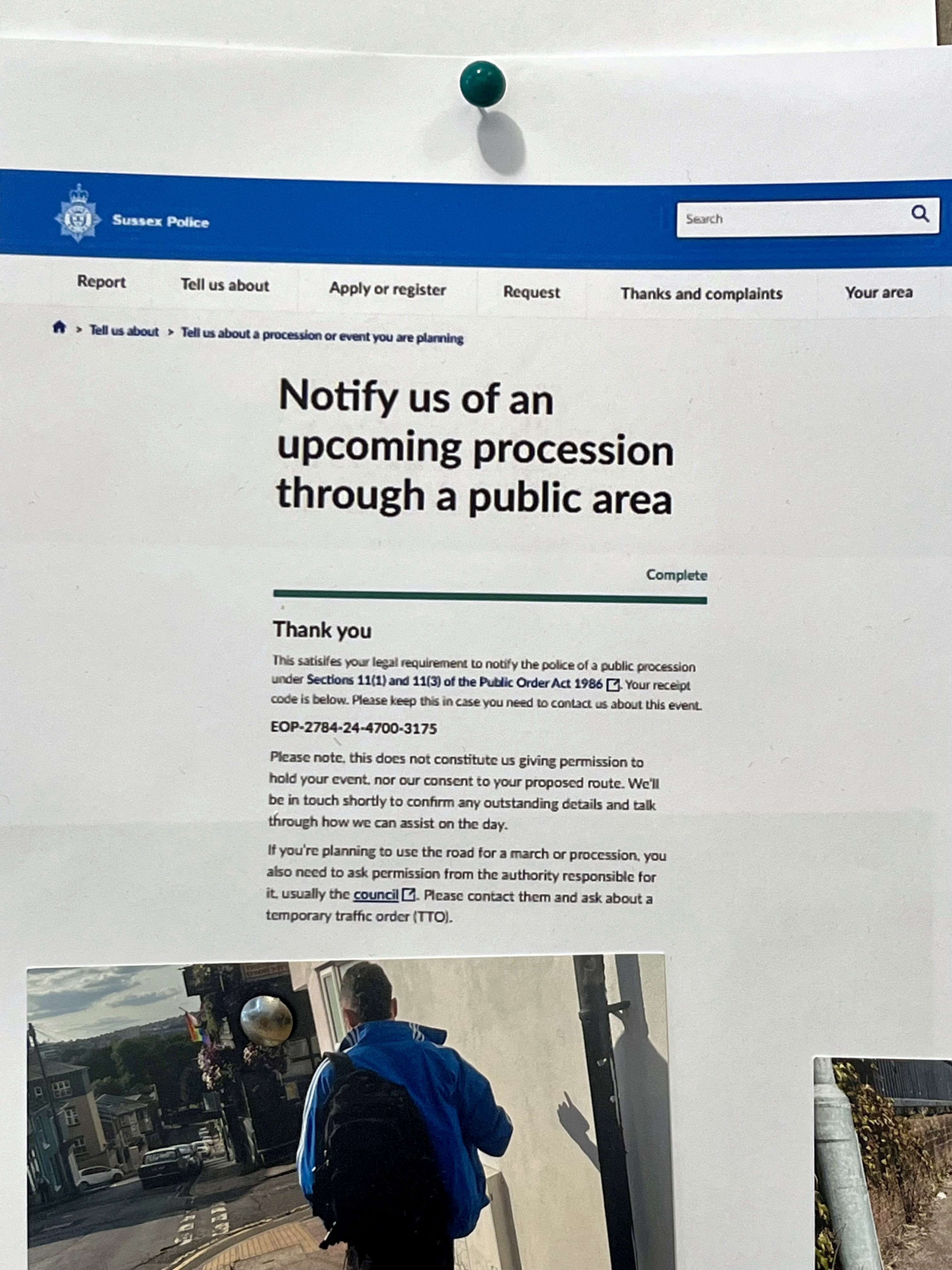
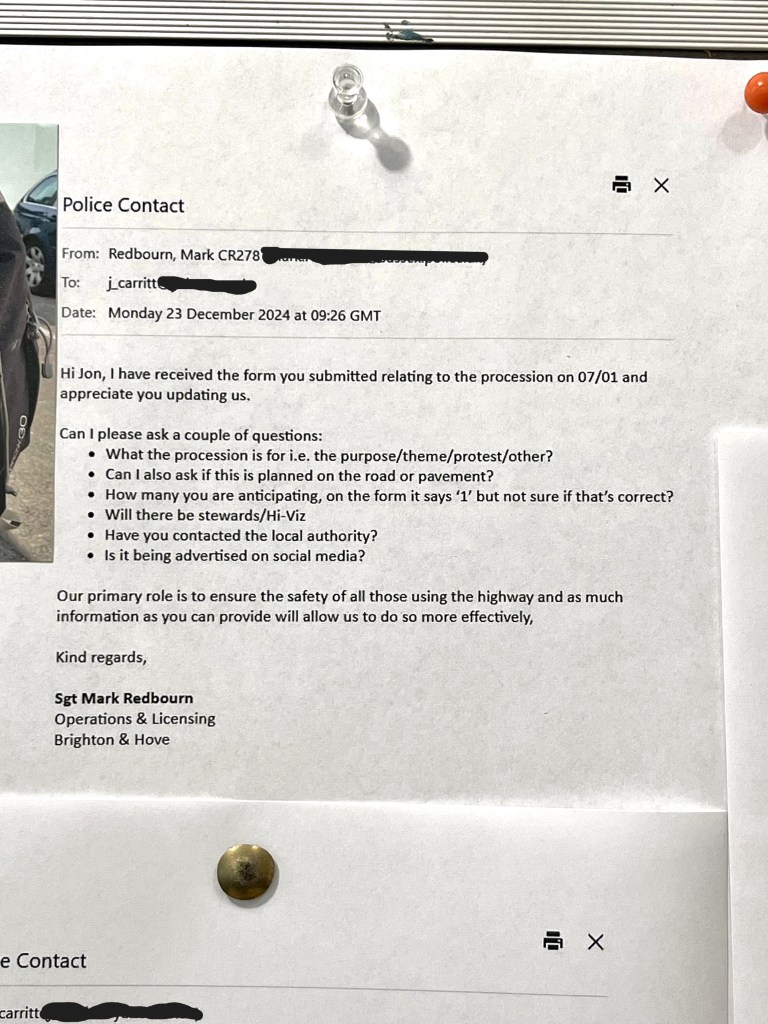

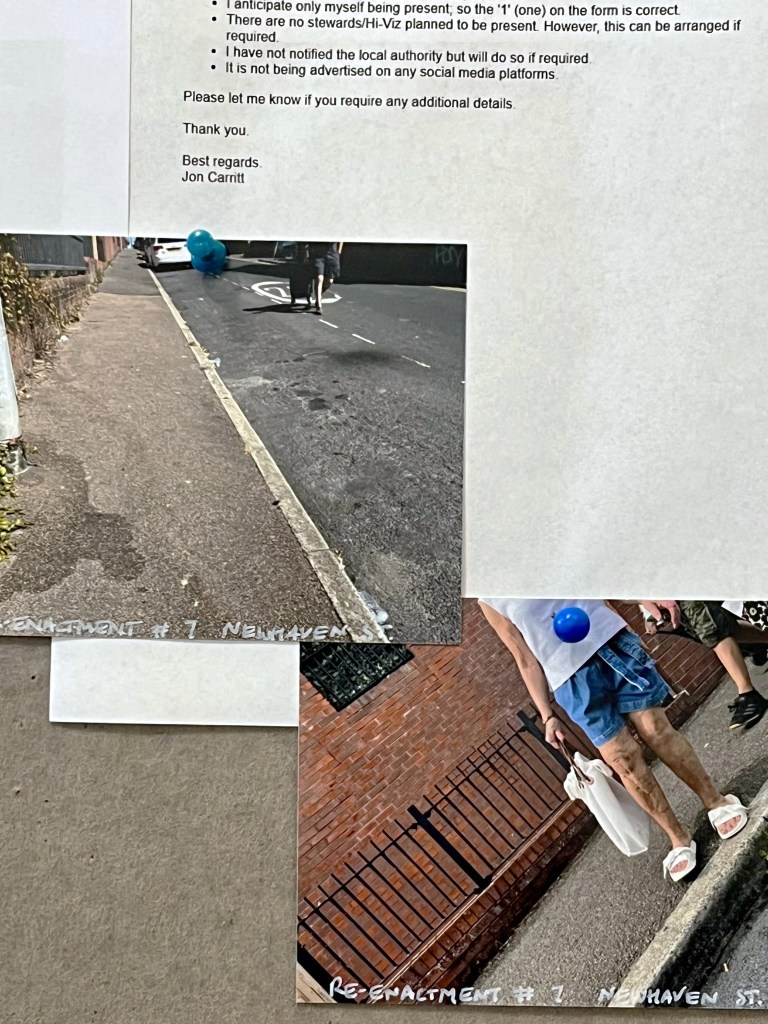

For one day in January 2025, we decided to transform an ordinary walk from home to work into a procession. A procession, as defined by the Public Order Act 1986, refers to a march or moving protest, but also encompasses celebratory or religious parades. Legally, the organisers of a procession are required to notify the local police force in advance, even if only a single person is participating.
While the transformation of everyday actions or objects into art has arguably become an overfamiliar gesture by artists, often legitimised through the use of supports such as the plinth, frame, or vitrine—and reinforced by the authority of the gallery—we were interested in how other forms of authority might similarly be utilised to transform or elevate the everyday. In this case, it was the legal framework of procession law that recontextualised a routine commute as a formally recognised public event.
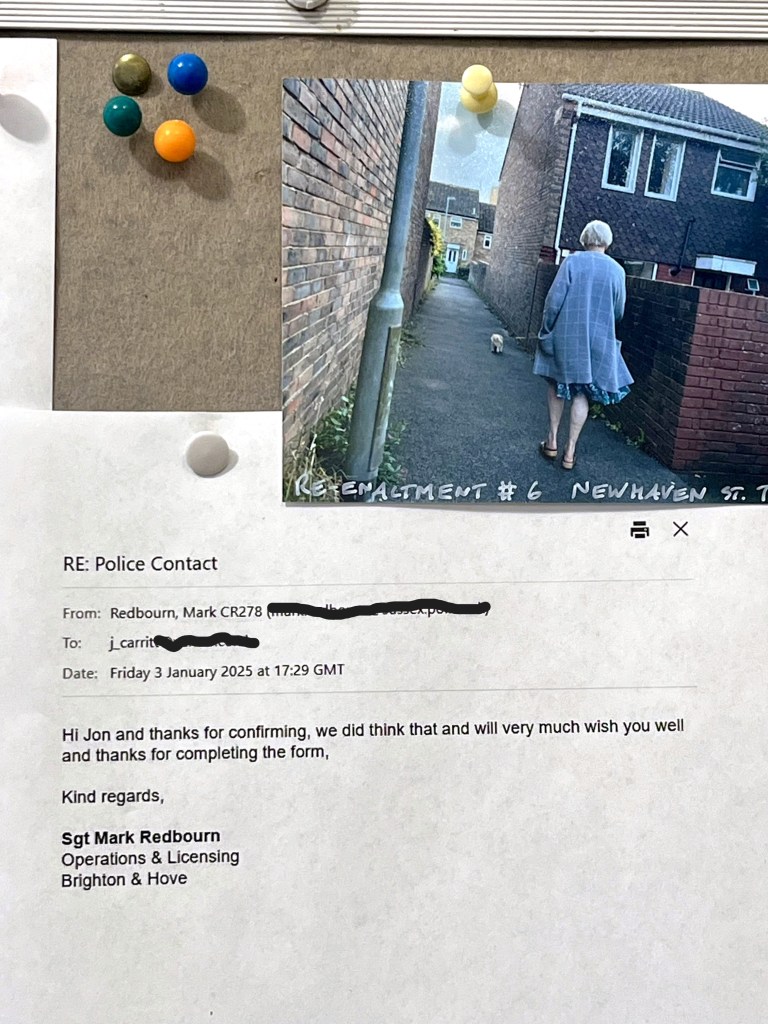
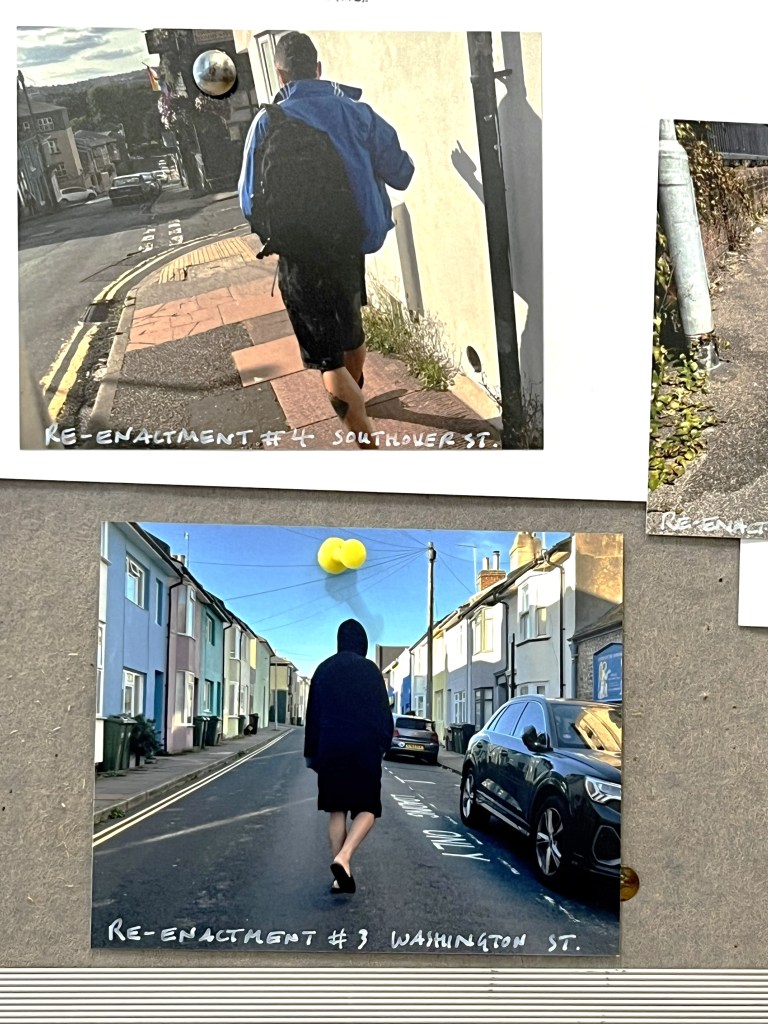
Rather than presenting a live or recorded performance of the procession, the work consists of the records of the administrative process to organise the procession, and ‘re-enacted’ photographic documents, produced on various later dates, of people who happened to be walking on the procession’s route. This material is displayed pinned to a noticeboard.
 jon carritt & dan palmer